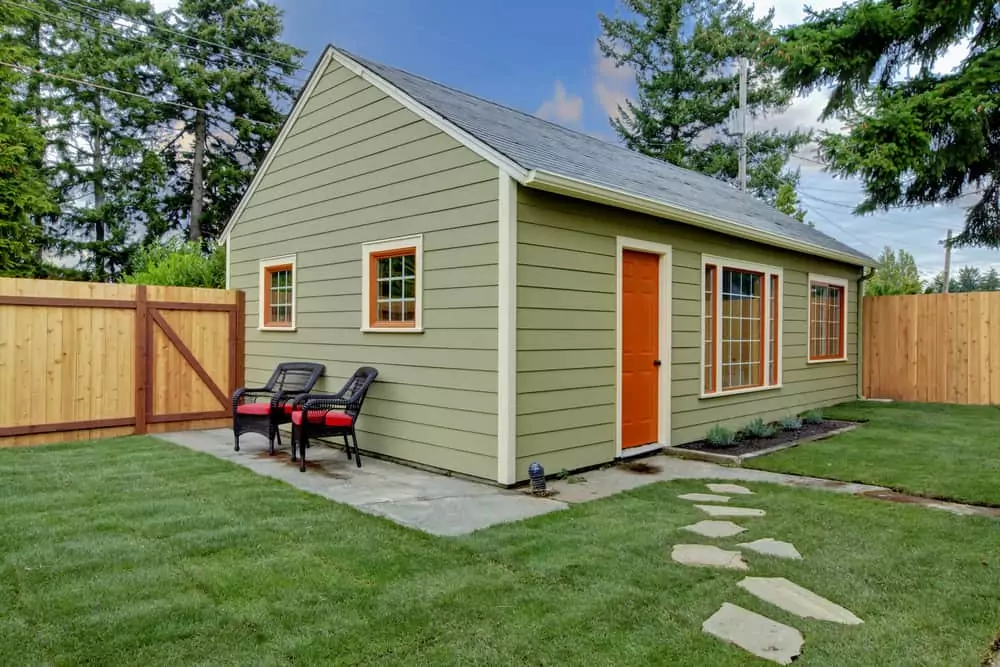
An ADU (Accessory Dwelling Unit) is one of the most versatile upgrades a homeowner can make. It’s not just a small extra building, it’s a tool for income, flexibility, family support, and long-term wealth building.
Why Build an ADU in the First Place?
San Diego’s housing shortage has pushed rents and home prices to some of the highest levels in the nation. At the same time, California has aggressively loosened regulations around Accessory Dwelling Units (ADUs), making it easier and faster for homeowners to add a second unit to their property. In many cases, parking requirements are reduced, setbacks are relaxed, and impact fees are limited or waived.
Rental Income
ADUs are most commonly used to generate rental income. You can rent long-term to tenants, offer mid-term furnished rentals or short-term vacation rentals, create student housing, support workforce housing (travel nurses, corporate events) and use it as a tool to offset your existing mortgage payment.
Multi-Generation Living
ADUs are also used for multi-generation living. They can help with aging parents to live nearby while still giving them privacy, adult children, returning family members or guests coming for the holidays, and helping elderly family members with caregiving that doesn’t compromise their autonomy.
Options to Fund an ADU Project
The biggest challenge for most homeowners isn’t whether an ADU makes sense… it’s how to pay for it. Below are the most common ways my team has helped San Diego homeowners finance ADU projects, along with the advantages and drawbacks of each option.
Paying Cash
Paying cash is the simplest way to fund an ADU project. You can break into the piggy bank, leverage your investments, or use proceeds from another asset sale (such as real estate) to fund some or all of the ADU construction without borrowing money from a bank.
Benefits
- No interest payments or financing fees
- No monthly debt obligation
- No appraisal, underwriting, or lender approval required
- Full ownership of the ADU from day one
For homeowners with substantial liquidity, paying cash offers simplicity and peace of mind.
Disadvantages
- Ties up large amounts of capital
- Reduces emergency or investment reserves
- Missed opportunity to leverage historically favorable real-estate appreciation
- Less flexibility if construction costs exceed estimates
Cash is often best for smaller ADU projects, ADUs in areas where the cost-to-build is lower (for example, it might be more feasible in Central Florida where the price to build an ADU is $150-160/sqft compared to San Diego where the average price is $300-350/sqft) or homeowners with strong liquidity and minimal need for leverage.
HELOCs and Home Equity Loans (HELOANs)
A Home Equity Line of Credit (HELOC) allows homeowners to borrow against existing equity as needed, much like a credit card; a Home Equity Loan provides a lump sum with a fixed rate and term.
Benefits
- Typically lower interest rates than personal loans
- Interest may be tax-deductible (consult a tax professional, like Aaron Torres)
- HELOCs offer flexibility to draw funds as construction progresses
- Faster approval compared to renovation refinance loans
These options are popular for phased ADU builds where costs are spread over time. A good strategy with HELOCs and HELOANs are to draw from the line as needed, based on phases of the build. This strategy is very common for builders to implement. You can draw what you need, pay interest only on what is drawn (much like a credit card) and pay it off without having to worry about a prepayment penalty.
Disadvantages
- Most have variable interest rates (especially with HELOCs)
- Payments begin immediately
- Loan limits depend heavily on current equity and credit profile
- Creates a second lien on the home
HELOCs and home equity loans work well for homeowners with significant equity who want flexibility without refinancing their existing mortgage.
Cash-Out Refinance
A cash-out refinance replaces your current mortgage with a new, larger loan and allows you to withdraw the difference in cash to fund the ADU.
Benefits
- Generally lower interest rates than HELOCs or personal loans
- One single monthly mortgage payment
- Long repayment terms (often 30 years)
- Can fund the entire ADU project at once
This option can be attractive when interest rates are favorable or when homeowners want to consolidate debt.
Disadvantages
- Resets your mortgage term
- Increases your loan balance and monthly payment
- Not ideal if your current rate is much lower than today’s rates
Cash-out refinancing works best when the ADU income helps offset the higher mortgage payment, or after using a HELOC/HELOAN, and you can secure a monthly payment lower than the existing 1st lien and 2nd lien.
Renovation Refinance
Our Renovation Refinance program allows homeowners to refinance their mortgage and include renovation costs, such as building an ADU, into a single loan based on the future value of the property after completion.
Benefits
- Can be used to purchase a home and build an ADU too
- Finance both the home and ADU with one loan
- Uses after-improved value, not just current value
- Potentially lower rates than construction or private loans
- Can be structured as a fixed-rate mortgage
For homeowners lacking sufficient equity today but with strong future value potential, this can be a powerful tool.
Disadvantages
- More complex underwriting process
- Red tape: requires licensed contractors and approved plans
- Funds are disbursed through draws, not upfront
- Longer timelines than traditional refinances
Our Renovation Refinance program is best for homeowners planning a full, permitted ADU build who want long-term financing at conventional rates.
Personal Loans
Personal loans are unsecured loans offered by banks, credit unions, and online lenders, typically with fixed rates and shorter terms.
Benefits
- Fast approval and funding
- No home equity required
- No appraisal or lien on the property
- Useful for smaller ADU projects or gap financing
- Sometimes don’t require collateral (such as your home)
Personal loans can be helpful when time is critical or when equity is limited.
Disadvantages
- Higher interest rates
- Shorter repayment terms
- Lower loan limits
- Monthly payments can be way higher than a HELOC or a refinance
Personal loans are generally better for partial or gap funding rather than full ADU construction.
Please note that I do not originate personal loans as they are not collateralized by real estate; however, I am more than happy to take a look at the overall picture and see if a personal loan works in your situation.
Construction, Hard Money & Private Money
Construction loans, hard money or private money lenders offer short-term loans based primarily on the deal, which includes the property, the investment strategy, and comparative values of similar properties rather than borrower income or credit.
With these types of loans, interest is paid either two ways: Dutch or non-Dutch. Dutch interest is paying interest on the entire loan amount, whereas non-Dutch interest is paying interest only on what is drawn. With these loans, you typically do not pay the principal, only interest. This keeps the monthly payments low, and does not have a significant impact on payoff anyway due to amortization of fixed mortgages being lower when the loan is first originated.
For example: if you take out a $200,000 construction loan, and there are 4 draw periods of $50,000 each, with Dutch, you will be paying interest on the $200,000 for the entire term of the loan. With non-Dutch, you are only paying interest on the first draw ($50,000) until the first phase is complete, and so on and so forth.
Benefits
- Fast approvals
- Flexible underwriting standards
- Can fund unconventional or non-traditional projects
- Useful when timing or credit is an issue
These loans are often used by investors or homeowners planning to refinance once the ADU is complete.
Disadvantages
- For non-owner occupied (investment) properties only: the owner has to move out if they haven’t done so already
- High interest rates, though they are typically interest only and non-Dutch (you only pay interest on the amount drawn so far)
- Short repayment periods (12 months is the most common, though 18 or 24 month durations are also sometimes seen for bigger projects)
- Significant costs in the form of fees and points due to them being business purpose loans
- Higher risk if exit strategy is delayed (due to late fees, compromise of collateral, etc.)
Hard money works best as a temporary solution when all else fails; construction loans are more used for investment properties, but could provide a worthwhile solution as long as you don’t live in the property.
Closing Thoughts
There are many ways to finance building an ADU. Overall, it’s a worthwhile strategy and can be used to accomplish multiple goals in the investing space and otherwise. Between creating additional income opportunities for a single family home, solving your community’s housing crisis, or multi-generational living, building an ADU is overall a very worthwhile investment to pursue.